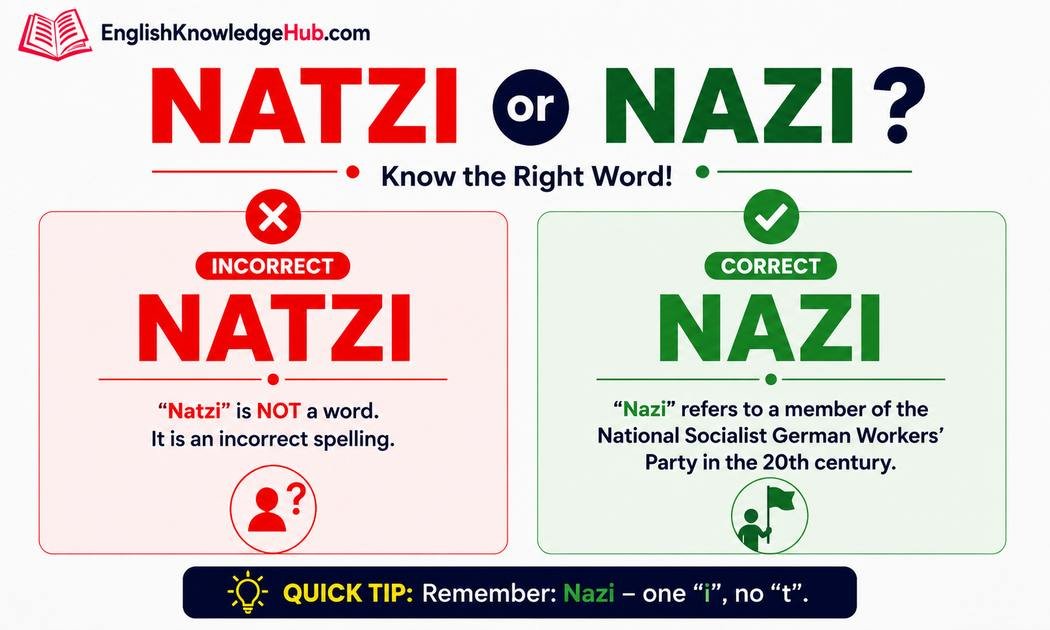
Many people search for “Natzi or Nazi” because they are unsure which spelling is correct. The correct spelling is Nazi. The word “Natzi” is a common spelling mistake and is not the standard English spelling. The confusion happens because many people pronounce the word as “nat-see,” which can make it look like it contains a “t” sound.
The correct word is Nazi, which refers to a member of Adolf Hitler’s National Socialist German Workers’ Party (NSDAP) or something connected with Nazi ideology and Nazi Germany. The term comes from the German word Nationalsozialist (“National Socialist”).
Natzi vs Nazi: Quick Answer
| Word | Correct? | Explanation |
|---|---|---|
| Nazi | ✅ Correct | The accepted spelling in English |
| Natzi | ❌ Incorrect | A common spelling mistake |
Example:
❌ The Natzi Party ruled Germany.
✅ The Nazi Party ruled Germany.
What Is the Correct Spelling: Natzi or Nazi?
The correct spelling is Nazi.
Although Natzi may look logical because of the pronunciation, English spelling follows the original form of the word rather than how some people hear it.
The word is written:
Nazi
Not:
Natzi
Not:
Natsi
Not:
Nazy
When writing about history, education, or research, always use Nazi.
What Does Nazi Mean?
The word Nazi has a historical meaning. It originally described a member of the National Socialist German Workers’ Party (NSDAP), the political party led by Adolf Hitler in Germany. The party controlled Germany from 1933 to 1945 and created a dictatorship based on extreme nationalism, racism, and antisemitism.
Today, the word may also describe:
- Nazi Germany
- Nazi ideology
- Nazi policies
- Nazi organizations
The term should be used carefully because it is connected with serious historical events, including World War II and the Holocaust.
Where Did the Word Nazi Come From?
The word Nazi is a shortened form of the German word:
Nationalsozialist
Meaning:
National Socialist
It comes from the name of Hitler’s political party:
Nationalsozialistische Deutsche Arbeiterpartei (NSDAP)
(National Socialist German Workers’ Party)
Over time, the shortened form Nazi became widely used in English and other languages.
The history of the word is also more complex because “Nazi” had other uses in German before it became connected with Hitler’s movement. In some regions, it was used as a nickname related to the name Ignaz and could refer to a simple or awkward person. Later, political opponents used “Nazi” as a shortened name for National Socialists.
Why Do People Confuse Natzi and Nazi?
There are several reasons people write Natzi instead of Nazi.
1. Pronunciation confusion
The word is commonly pronounced:
NAHT-see
When people hear this sound, they may think the spelling should include a “t.”
This creates the incorrect spelling:
Natzi
But the correct spelling remains:
Nazi
2. English spelling habits
English has many words where sounds and letters do not match perfectly.
For example:
- “phone” does not start with an “f”
- “science” does not sound exactly like it looks
The same idea applies to borrowed words like Nazi.
3. People hear the word before seeing it written
Many people learn historical terms through conversations, videos, or movies. If they have never seen the word written, they may guess the spelling based on sound.
Nazi Examples in Sentences
Here are some examples of the correct usage of Nazi:
Historical examples:
- The Nazi Party came to power in Germany in 1933.
- Many historians study Nazi Germany and World War II.
- The Holocaust occurred during the Nazi regime.
General examples:
- The museum contains documents from the Nazi era.
- Students learn about Nazi history in modern history classes.
Nazi vs Nazism vs Nazi Party
These terms are related but have different meanings.
| Term | Meaning |
| Nazi | A person connected with the Nazi movement or something related to it |
| Nazism | The political ideology of the Nazi movement |
| Nazi Party | The political organization led by Adolf Hitler |
Example:
- “He studied Nazi Germany.” → Refers to the historical period.
- “He studied Nazism.” → Refers to the ideology.
- “The Nazi Party ruled Germany.” → Refers to the organization.
Common Mistakes When Using Nazi
Mistake 1: Writing “Natzi”
Incorrect:
Natzi Germany
Correct:
Nazi Germany
Mistake 2: Confusing Nazi with Nazism
Incorrect:
Nazism was a person.
Correct:
Nazism was an ideology.
Mistake 3: Using Nazi as a casual insult
The word “Nazi” has a serious historical meaning. While it is sometimes used informally in phrases like “grammar Nazi,” some people consider this usage inappropriate because it compares strict behavior with a movement responsible for major crimes.
How Do You Pronounce Nazi?
The common English pronunciation is:
NAHT-see
Some accents may sound slightly different, but the spelling remains the same:
✅ Nazi
Not:
❌ Natzi
Is Natzi a Word?
No. Natzi is not the standard spelling of the historical term.
If you are writing an article, essay, school assignment, or research paper, use:
Nazi
Frequently Asked Questions (FAQ)
Is Natzi or Nazi correct?
Nazi is correct. Natzi is a misspelling.
Why is Nazi spelled without a T?
Because the word comes from German Nationalsozialist, not from an English spelling based on pronunciation.
What does Nazi stand for?
Nazi is short for Nationalsozialist, meaning National Socialist.
Who were the Nazis?
The Nazis were members or supporters of Adolf Hitler’s National Socialist German Workers’ Party, which ruled Germany from 1933 to 1945.
Is Nazi the same as fascist?
They are related but not exactly the same. Nazism was a specific German political movement, while fascism is a broader type of authoritarian political ideology.
Should Nazi be capitalized?
Yes. When referring to the historical movement, party, or ideology, Nazi is usually capitalized.
Examples:
- Nazi Germany
- Nazi Party
- Nazi ideology
Final Summary
The correct spelling is Nazi, not Natzi.
“Natzi” is a common mistake caused by pronunciation. The word Nazi comes from the German term Nationalsozialist and refers to the movement, party, and ideology connected with Adolf Hitler’s rule in Germany.
Remember:
✅ Nazi = Correct spelling
❌ Natzi = Common spelling mistake
Want to learn more confusing English words, spelling differences, and grammar tips? Visit EnglishKnowledgeHub.com for simple explanations, clear examples, and easy English learning guides.
