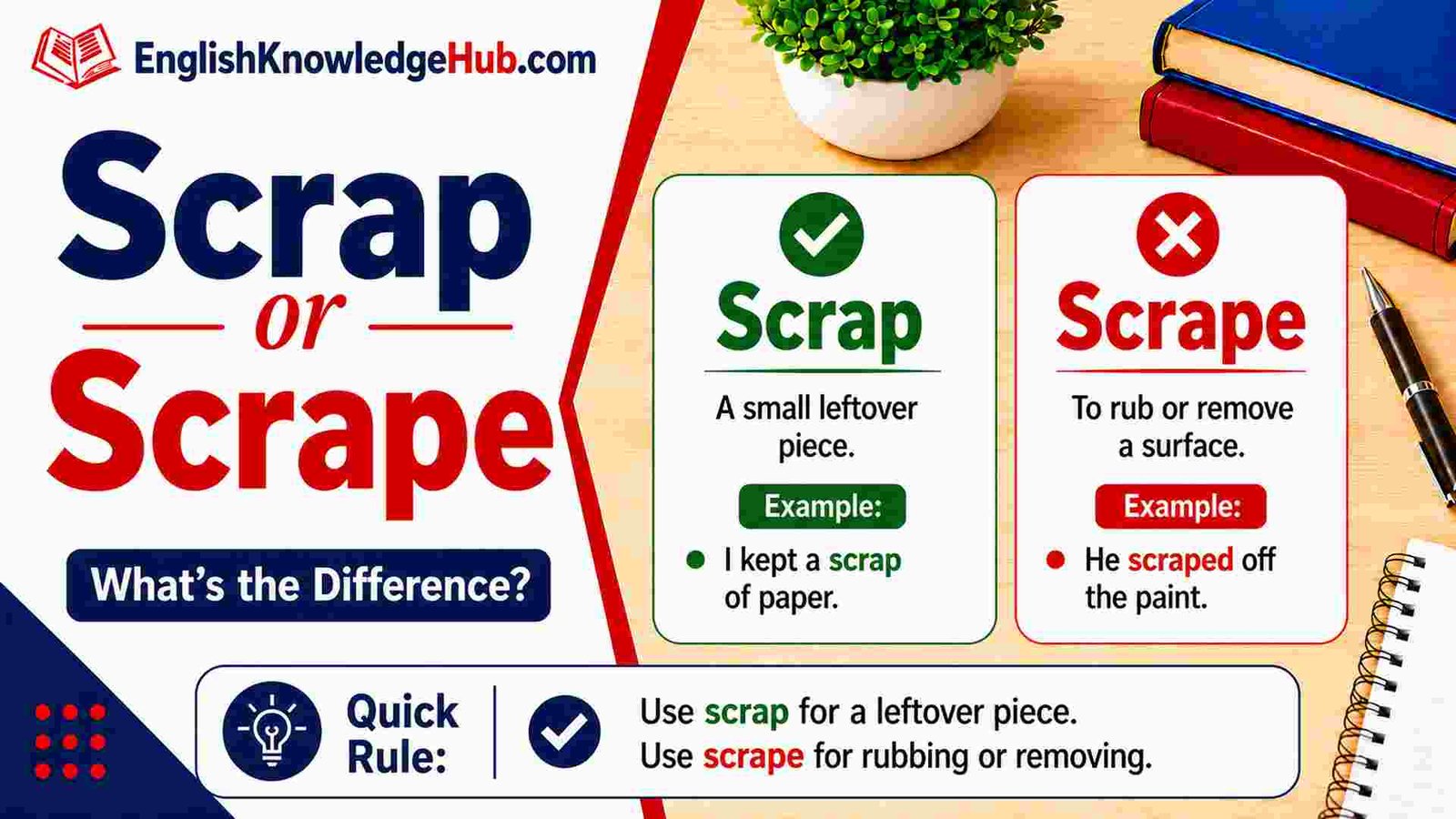
Scrap or Scrape are both correct words, but they do not mean the same thing. Use scrap when you mean to throw something away, stop a plan, or talk about leftover material. Use scrape when something rubs against a surface, gets scratched, or is removed from a surface. This guide shows the difference with simple examples.
The words look almost the same, so they are easy to mix up. The best way to choose the right word is to think about the action.
If something is being thrown away or stopped, use scrap.
If something is being rubbed, scratched, or removed from a surface, use scrape.
Scrap or Scrape: Quick Answer
| Word | Simple Meaning | Example |
|---|---|---|
| Scrap | Throw away or stop | We will scrap the old plan. |
| Scrap | A small leftover piece | I found a scrap of paper. |
| Scrape | Rub or scratch | I scraped my arm on the wall. |
| Scrape | Remove from a surface | Scrape the mud from your shoe. |
A simple way to remember it is:
Scrap means get rid of it.
Scrape means rub it or remove something from its surface.
What Does Scrap Mean?
The word scrap can be a verb or a noun.
As a verb, it often means to stop using something or decide not to continue with it.
For example:
- We may scrap the old project.
- Dad decided to scrap the broken bike.
- The school scrapped its first plan.
- The team may scrap the idea and start again.
In each sentence, something is being stopped, removed, or thrown away.
Scrap as a Noun
As a noun, scrap can mean a small leftover piece.
For example:
- I wrote the phone number on a scrap of paper.
- The dog ate a few scraps from dinner.
- She saved scraps of cloth for a small craft.
- The workers put the old metal in the scrap pile.
So, scrap often connects with things that are left over, unwanted, or no longer useful.
What Does Scrape Mean?
The word scrape usually means to rub something against a hard or rough surface.
It can also mean to remove something by rubbing it with a tool or hard edge.
For example:
- I scraped my knee on the ground.
- Please scrape the mud from your boots.
- The chair scraped against the floor.
- She scraped the old sticker from the jar.
The main idea is surface contact.
Something rubs, scratches, or comes off.
The Easy Difference Between Scrap and Scrape
Here is a simple test.
Ask yourself:
Am I getting rid of something, or am I rubbing a surface?
Use scrap when you mean:
- throw away
- stop
- cancel
- remove from use
- leftover material
Use scrape when you mean:
- rub
- scratch
- remove a layer
- cause a small skin injury
That one question can help you choose the right word very quickly.
Scrap the Car or Scrape the Car?
Both can be correct, but they mean different things.
Scrap the car
This means you no longer want to use the car.
Example:
The car was too old to fix, so we decided to scrap it.
Scrape the car
This means the car rubbed against something and got a mark.
Example:
Ben scraped the car against the gate.
These two sentences show why one small letter matters.
Scrap the Plan or Scrape the Plan?
Use scrap the plan.
Example:
We had to scrap the picnic plan because the park was closed.
This means the plan was cancelled.
Do not normally say scrape the plan because a plan is not a surface that you rub.
Incorrect:
We decided to scrape the plan.
Correct:
We decided to scrap the plan.
Explanation:
You are stopping the plan, so scrap is the right word.
Scrap the Paint or Scrape the Paint?
This depends on your meaning.
If you remove paint from a wall or door, use scrape.
Example:
We need to scrape the old paint from the door.
If you decide not to use a type or color of paint, scrap may be possible.
Example:
We scrapped the blue paint idea and chose white.
The first sentence talks about physical removal.
The second talks about rejecting an idea.
Common Mistakes With Scrap or Scrape
These mistakes happen because the words look and sound similar.
Mistake 1: Scrapped My Knee
Incorrect:
I fell and scrapped my knee.
Correct:
I fell and scraped my knee.
Explanation:
Your knee rubbed against a rough surface. That is a scrape, not a scrap.
Mistake 2: Scrape the Old Plan
Incorrect:
The manager wants to scrape the old plan.
Correct:
The manager wants to scrap the old plan.
Explanation:
The manager wants to stop using the plan. Use scrap.
Mistake 3: Scrapped the Mud Off
Incorrect:
He scrapped the mud off his shoes.
Correct:
He scraped the mud off his shoes.
Explanation:
He removed mud from a surface, so scraped is correct.
Mistake 4: Scraped the Broken Machine
Incorrect:
The factory scraped the broken machine because it was useless.
Correct:
The factory scrapped the broken machine because it was useless.
Explanation:
The machine was taken out of use. It was not simply scratched.
Scraped or Scrapped?
The past forms can also cause trouble.
The past tense of scrape is:
scrape → scraped
The past tense of scrap is:
scrap → scrapped
Look at these examples:
- I scraped my hand on the fence.
- We scrapped the broken table.
- She scraped food from the plate.
- The company scrapped the old rule.
The spelling is important.
Scraped has one p.
Scrapped has two p’s.
Scraping or Scrapping?
These forms also have different meanings.
Scraping comes from scrape.
Example:
He is scraping paint from the wall.
Scrapping comes from scrap.
Example:
They are scrapping the old machines.
Think of it this way:
Scraping = rubbing or removing
Scrapping = throwing away or stopping
Scrap or Scrape in Daily Life
You may use both words often in normal conversation.
Examples with scrap:
- We should scrap this broken box.
- I found a scrap of paper in my pocket.
- They scrapped the old family car.
- Mom saved a few food scraps for the birds.
Examples with scrape:
- I scraped my finger on the shelf.
- Scrape the ice from the window.
- The box scraped across the floor.
- She scraped some cheese from the plate.
Scrap or Scrape at Work
The difference is also important at work.
Examples:
- The company may scrap the old system.
- Please scrape the label from the box.
- We scrapped the first design after the meeting.
- The worker scraped rust from the metal door.
Choosing the wrong word can change the whole meaning of a sentence.
Scrap or Scrape in School and Academic Writing
You may also see these words in school or study writing.
Examples:
- The student wrote a note on a scrap of paper.
- The science team scrapped its first test plan.
- The student scraped a small sample from the rock.
- The old table had a deep scrape on one side.
These examples show that scrap often connects with things being rejected or left over, while scrape connects with surfaces.
Is It Scrap Metal or Scrape Metal?
The correct phrase is scrap metal.
Scrap metal means old or unwanted metal that may be reused or recycled.
Example:
The workers collected scrap metal behind the shop.
You can use scrape with metal as a verb.
Example:
Do not scrape the metal chair across the floor.
Here, scrape means rub.
Is It Scrape Off or Scrap Off?
Use scrape off when you remove something from a surface.
Examples:
- Scrape off the old glue.
- Scrape the ice off the glass.
- She scraped the dirt off her shoe.
Scrap off is not the normal phrase for this meaning.
What Does a Scrape Mean?
A scrape can also be a small skin injury.
Example:
I have a small scrape on my elbow.
A scrape is usually not a deep cut. It often happens when your skin rubs against the ground, a wall, or another rough surface.
The word can also mean a difficult situation in informal English.
Example:
He got into a small scrape at school.
Here, scrape means trouble.
What Does a Scrap Mean?
A scrap can be a small piece of something.
Examples:
- a scrap of paper
- a scrap of cloth
- food scraps
- scrap metal
It can also be used as a verb when something is stopped or thrown away.
Example:
The club scrapped its old rule.
A Simple Memory Trick
Here is an easy way to remember the two words.
Think:
Scrap = Stop it or throw it away.
Scrape = Scratch a surface.
Both scrape and scratch start with the sound scr and both can involve surface damage.
This small link may help you remember the correct word.
More Easy Examples
With Scrap
- We scrapped the broken chair.
- She found a scrap of blue cloth.
- The team may scrap the old plan.
- He sold the damaged bike for scrap.
With Scrape
- I scraped my leg on a stone.
- Scrape the dirt from the plate.
- The box scraped the wall.
- She scraped old glue from the desk.
Frequently Asked Questions
Is scrap or scrape correct?
Both are correct. Use scrap for throwing away, cancelling, or leftover material. Use scrape for rubbing, scratching, or removing something from a surface.
Is it scraped or scrapped my knee?
Use scraped my knee. Your skin rubbed against a rough surface.
Is it scrap or scrape a car?
Use scrap a car when you throw it away or stop using it. Use scrape a car when its surface rubs against something and gets damaged.
Do you scrap or scrape paint?
You scrape paint from a wall or door. You may scrap a paint idea if you decide not to use it.
What is the past tense of scrap?
The past tense is scrapped.
Example:
We scrapped the old plan yesterday.
What is the past tense of scrape?
The past tense is scraped.
Example:
I scraped my hand on the fence.
Is it scrap metal or scrape metal?
The normal phrase is scrap metal. It means old or unwanted metal.
Final Thoughts
The difference between Scrap or Scrape is easy once you connect each word with its main idea. Use scrap when something is thrown away, stopped, or left over. Use scrape when something rubs against a surface or when you remove something from a surface.
Remember:
Scrap = get rid of it.
Scrape = rub or scratch it.
For more easy grammar lessons, word comparisons, and clear English examples, visit EnglishKnowledgeHub.com.
