Waring vs Wearing: Which Word Is Correct?
Wearing is the normal word for having clothes, glasses, or accessories on your body. Learn what waring can mean and how to choose the right spelling.
Learn English grammar rules explained in simple words, with easy examples on EnglishKnowledgeHub.com.
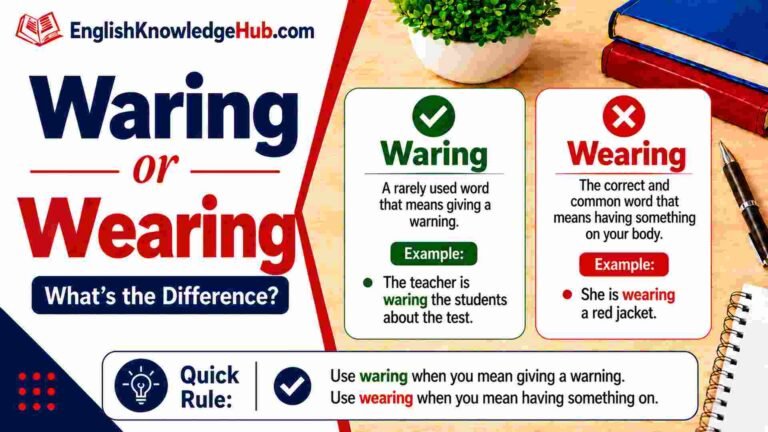
Wearing is the normal word for having clothes, glasses, or accessories on your body. Learn what waring can mean and how to choose the right spelling.
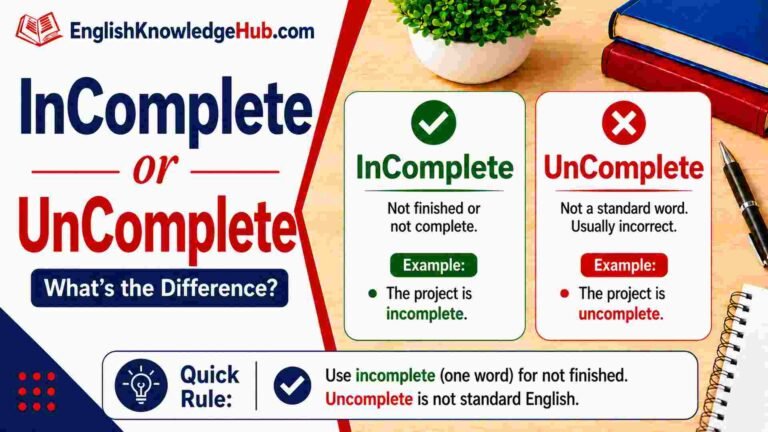
Incomplete or Uncomplete? “Incomplete” is the standard word in modern English. It means that something is missing a part, lacks…
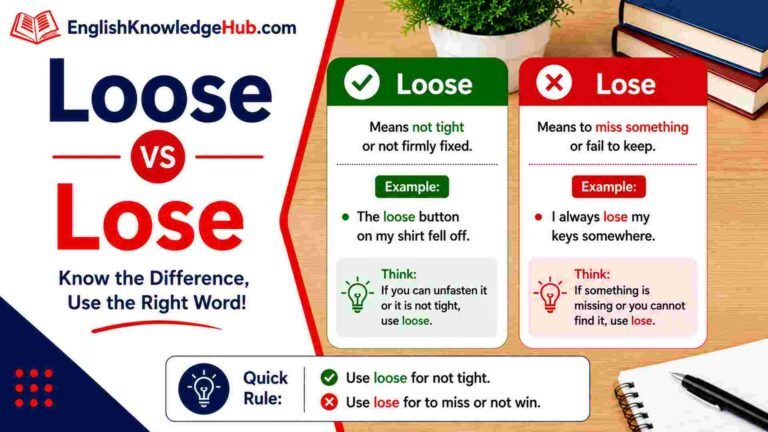
Loose usually means not tight or secure; lose is a verb meaning misplace, stop having, or fail to win. Learn pronunciation, losing vs loosing, and common expressions.
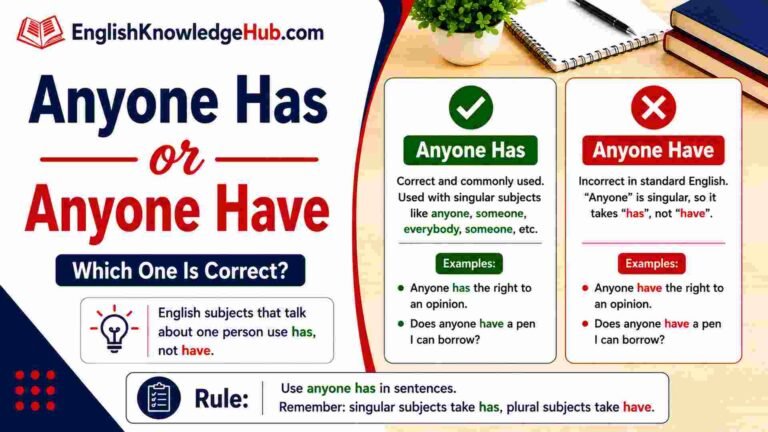
Anyone is grammatically singular, so statements use anyone has, while questions normally use does anyone have. Learn the rule, common patterns, and natural examples.
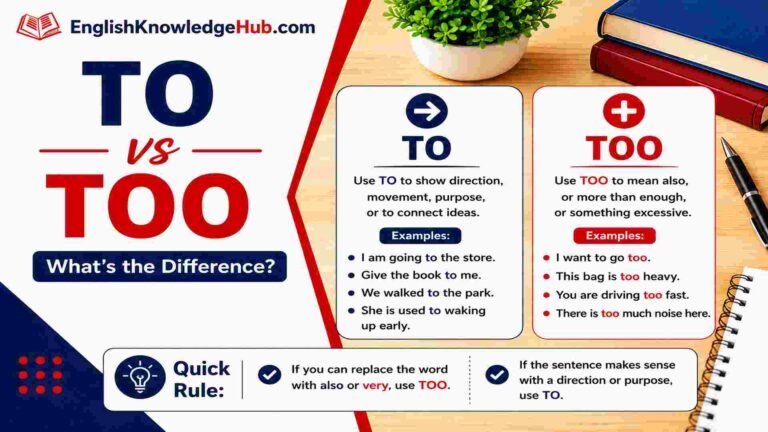
Use to for direction, receivers, and infinitives. Use too for “also” or an excessive amount. Learn the difference through natural sentence patterns and common mistakes.
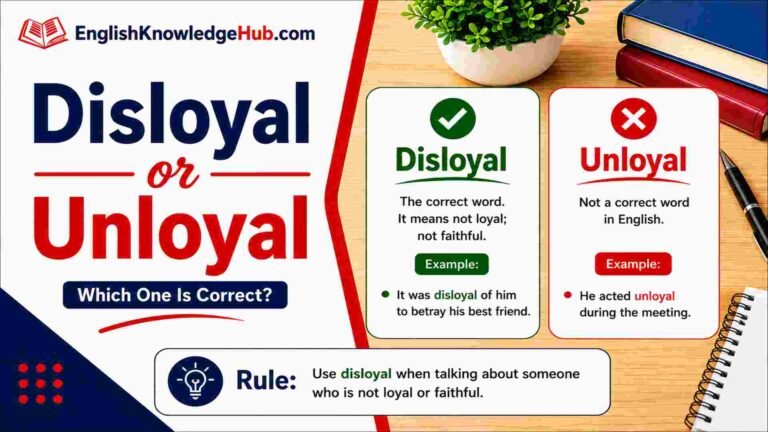
Disloyal is the standard modern opposite of loyal; unloyal is rare. Learn the difference, natural sentence patterns, related words, and common usage mistakes.
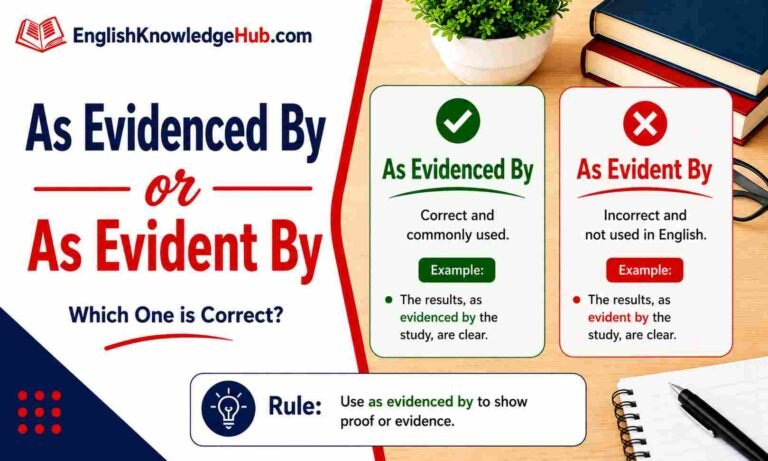
Use “as evidenced by” to mean “as shown by.” “As evident by” is usually avoided in careful English; use “as is evident from” instead. See examples and clearer alternatives.
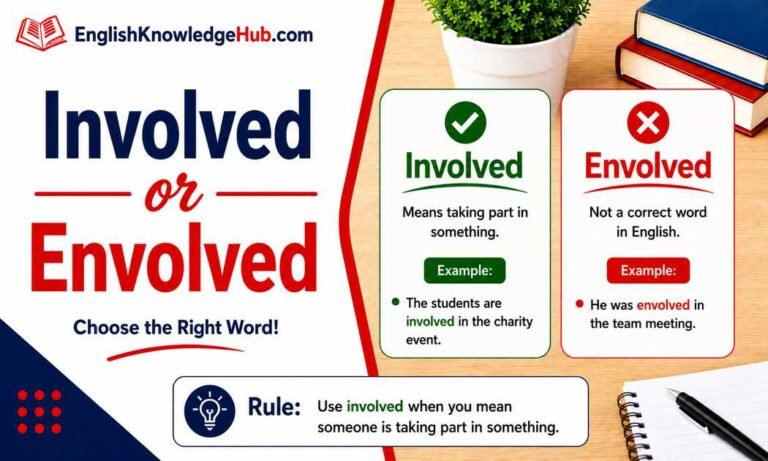
Involved is the standard spelling; envolved is not the normal modern form. Learn involved in vs involved with, involved vs evolved, meanings, forms, and common mistakes.
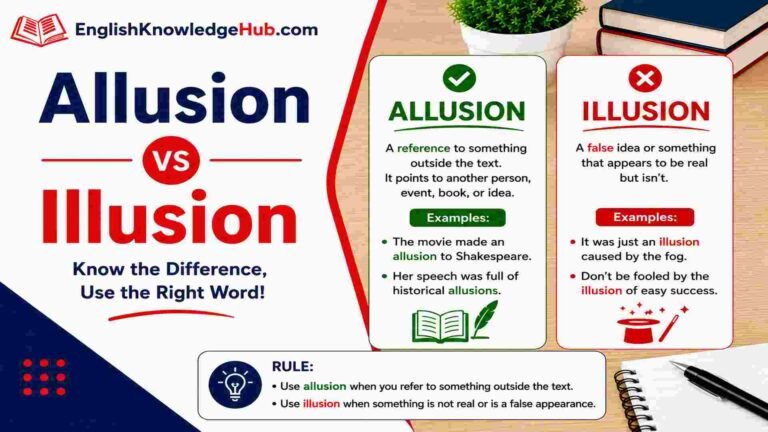
An allusion is an indirect reference; an illusion is a misleading or unreal appearance. Learn meanings, sentence patterns, related words, and common mistakes.
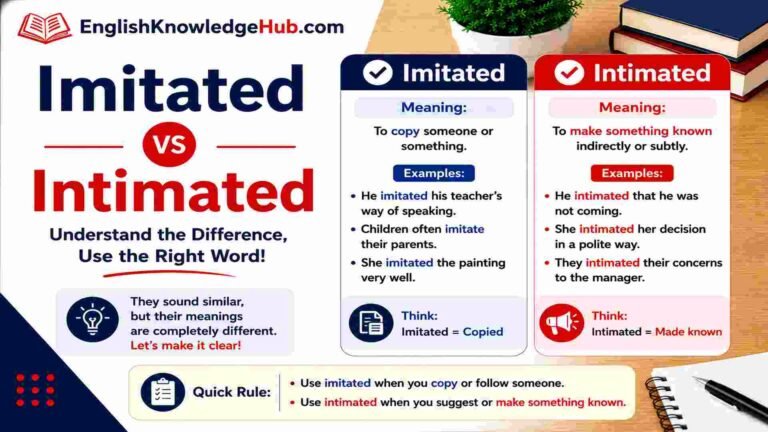
Imitated means copied or mimicked; intimated means hinted or suggested indirectly. Learn pronunciation, sentence patterns, tone, related nouns, and common mistakes.
End of content
End of content